AI news & hype
Chatbot for small business: what it must never make up

Founder of Get AI Working
Published Updated Facts checked
In short
A chatbot is a chat box on your website that answers visitors by itself. Whatever it says, your business said it, so it should answer only from a list you've approved, say plainly that it's a machine, and take a name and number for anything else. Keep customers' private details out of it.
A chat box on your website that answers questions at night sounds like free help. It is, until it makes something up. Then it’s your business that said it.
So the question isn’t which chatbot to buy. It’s what you let it say, and what it does when it doesn’t know.
What is a chatbot, in plain words?
A chatbot is the little chat box in the corner of a website. A visitor types a question and it types an answer back, by itself, with no person on the other end.
The newer ones run on AI, software that writes its own sentences instead of picking from a fixed script. That’s what makes them sound helpful. It’s also what lets them sound sure about things that aren’t true.
OpenAI, which makes ChatGPT, says its own AI “can produce incorrect or misleading outputs”.1 A chatbot built on the same kind of AI can do the same, on your website, under your name.
Who is responsible for what the chatbot says?
You are. The Australian Competition and Consumer Commission (ACCC), the regulator for how businesses treat customers, says any information a business gives about what it sells “must be accurate, truthful and based on reasonable grounds”.2
The ACCC lists websites among the places that rule covers, along with anything staff say.2 It adds: “It makes no difference whether a business intends to mislead or not”.2 A chat box on your website is your website talking.
A tribunal in Canada has already tested the excuse. In 2024 Air Canada’s website chatbot told a customer he could claim a cheaper bereavement fare, a discount for travelling after a death in the family, after his trip.3 The airline argued it couldn’t be held liable for what the chatbot said.
The tribunal disagreed: “It should be obvious to Air Canada that it is responsible for all the information on its website”.3 That was a Canadian decision, not an Australian one. In my view, it’s still the right way to think about yours.
What should a small business chatbot be allowed to say?
Only what you’d be happy to see in writing from your most careful staff member. That means a list you’ve written and approved: your hours, the area you cover, what you do and don’t do, how to book, and what happens next.
Anything off that list, it shouldn’t guess. It should say it doesn’t know, and ask for a name and a phone number or email address, so a person can answer properly. A question answered tomorrow by you beats one answered tonight by a guess.
Prices are the trap. If yours change, either keep the list up to date the same day, or have the chatbot say “we’ll confirm the price” and take their details.
Does a chatbot have to say it’s a machine?
It should, and plainly. The Office of the Australian Information Commissioner (OAIC), the privacy regulator, says businesses should make sure “any public facing AI tools (such as chatbots) are clearly identified as such”.4
The OAIC also says people should be “made aware that they are interacting with an AI system rather than a human”.4 A friendly name and a smiling photo don’t change what it is. Put “This is an AI assistant, not a person” in the first message, where nobody can miss it.
What about customers’ private details?
Ask only for what you need to call them back: a name, a phone number or an email address, and what they asked. That’s an enquiry, and you’d ask the same on the phone.
Keep anything more private out. The OAIC recommends that businesses “do not enter personal information, and particularly sensitive information, into publicly available generative AI tools”.4 That means AI tools anyone can sign up to online, the kind that write text for you.
If you paste your customer list into a chat app to “train” a chatbot, that’s exactly what you’d be doing. Our post on why legal isn’t the same as safe covers where customer details can and can’t go.
Is a chatbot worth it for a small business?
It depends on what people ask you. If the same questions arrive every night (are you open Saturday, do you come to Katoomba, how do I book), a chatbot that answers those from your list and takes details for the rest can turn a late-night visitor into a morning call.
If your enquiries are all different, or every answer starts with “it depends”, a chat box will either guess or say “leave your details” every time. A plain contact form does that already, for nothing.
And if your phone is the problem rather than your website, read our posts on an AI receptionist and a text back when you miss a call first.
How to set one up that won’t embarrass you
- Write the list first. The questions you get asked most, each with the answer you’d give. If you can’t write the answer down, the chatbot shouldn’t be giving it.
- Tell it to stay on the list. Look for the setting or instruction box that does this, then check it refuses a question that isn’t on the list.
- Make it say it’s a machine in its first message.4
- Make “I don’t know” end in a callback. Name, number or email, and the question, sent to you straight away.
- Test it like a difficult customer. Ask about a refund, a price you don’t offer and a suburb you don’t cover. Fix the list, not just the answer.
- Read what it said each week. Every conversation is a record of what your business told someone.
None of this makes a chatbot “compliant”, and no setting can promise that. It keeps what it says to what you’d say, which is where the ACCC says the responsibility sits anyway.2
If you’d rather hand it over
A chat box that actually helps is an option in Never Miss a Call: it answers only from a list you approved, takes details for the rest, and says it is a machine. If what you need is different, we scope it.
Book a free hour.
Sources and notes
- Verified, read 29 October 2026; first read 27 October 2026. OpenAI Help Center, "Does ChatGPT tell the truth?"; the page said it was updated six days before it was read. https://help.openai.com/en/articles/8313428-does-chatgpt-tell-the-truth
- Verified, read in a browser 29 October 2026. ACCC, "False or misleading claims"; no date shown on the page. https://www.accc.gov.au/business/advertising-and-promotions/false-or-misleading-claims
- Published. Moffatt v. Air Canada, 2024 BCCRT 149, Civil Resolution Tribunal of British Columbia, decided 14 February 2024. The decision's own pages would not load for us on 29 October 2026; the quoted sentence and the facts were checked that day in Daily Hive's report of 15 February 2024. https://dailyhive.com/canada/air-canada-chatbot-decision
- Verified, read 29 October 2026. Office of the Australian Information Commissioner, "Guidance on privacy and the use of commercially available AI products", published 21 October 2024, updated 17 January 2025. https://www.oaic.gov.au/privacy/privacy-guidance-for-organisations-and-government-agencies/guidance-on-privacy-and-the-use-of-commercially-available-ai-products
AI news & hype
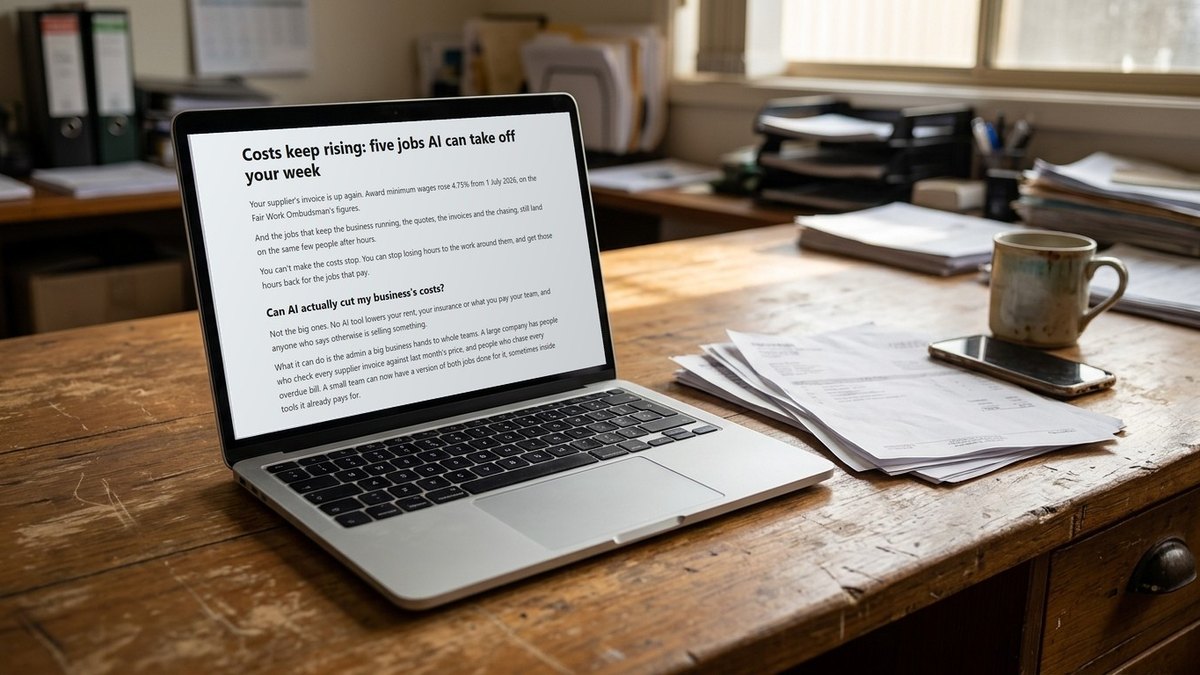
Costs keep rising: five jobs AI can take off your week
AI won't cut your rent, wages or power bill. It can check supplier bills for price rises, chase invoices, draft quotes and write up meetings, so your hours go further.
Rory McNeil 
AI news & hype
Is a brand refresh worth it? Yes, when your look doesn't match from the van to the website
What a brand refresh is and isn't, the signs a small business needs one, what it covers from the logo to the van, what it takes in time, the sign and trade mark rules to check in NSW, and what AI changes about it.
Rory McNeil 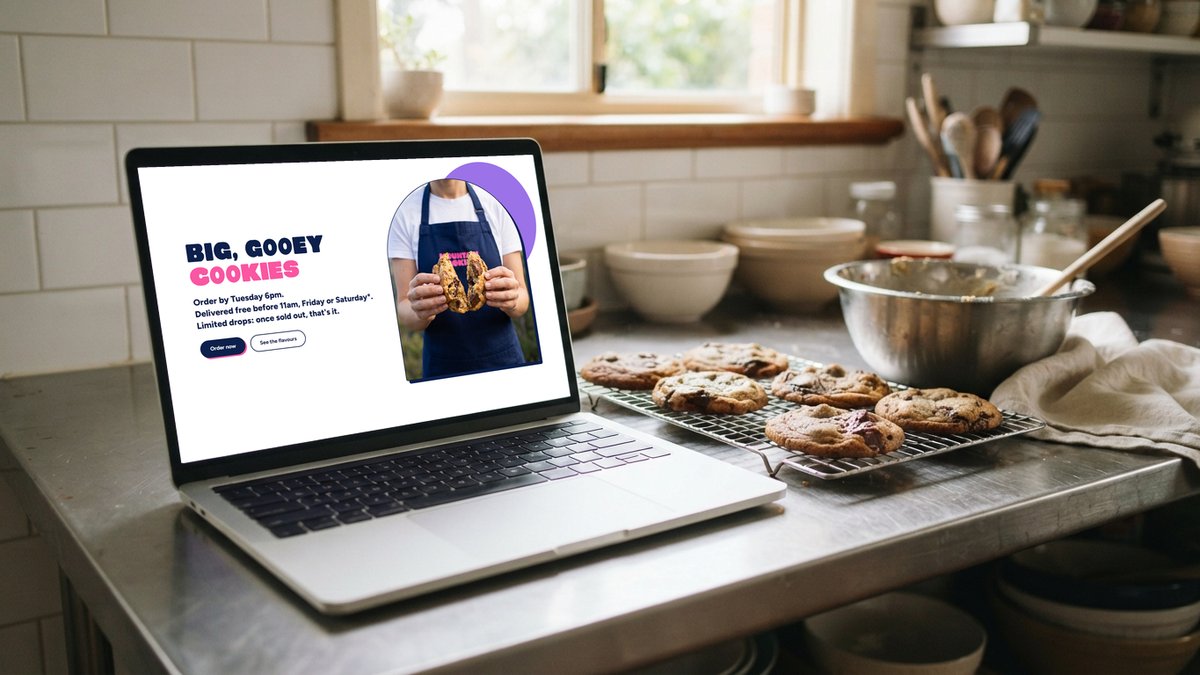
In the picture: the website of our founder's own family business.
AI news & hype
Is WordPress dead because of AI? No, but it's shrinking
No: WordPress is still the most used website system by a long way, but its share of websites is shrinking and more sites are built without one. Here's what that means for your business's site.
Rory McNeil